Is Social Media a force for good, or are we turning to the dark side?
Somewhere, in a galaxy far, far away: you are reading this article. Some may opt for the more traditional method, choosing to read this on a piece of A3. Or perhaps the technique you may choose requires a password, the words being complimented by an electrical glimmer of light. To my readers, who may not know what I’m dithering on about, I’m talking about a recent innovation to the world of technology, known as the smartphone.

Take Larry, 77, Chelsea and Fulham, a key contributor of mine, he does not own a smartphone. Rather than sending an e-mail or a nice little text message, he sent a letter. I guarantee, that Larry wouldn’t know who or what a “Snapchat” was if one gave him an uppercut to the jaw. And to my grandad, who has inevitably spat out his morning Shreddies at my persecution of the elderly, doesn’t have a router to fall back on when in dire straits.
I can assure you, if he saw Kylie Jenner roaming the aisles of Asda, he wouldn’t give her a second glance.
My point is, while millennials are now formulating careers from the comfort of their phones, the senior citizens of our isles haven’t the foggiest idea. To the naked eye, a career on Instagram may be a chance to make easy money. However, as you delve into the plethora of issues the app possesses, you uncover a vast underbelly: of torment and misery.
A recent BBC documentary uncovered the abuse Jesy Nelson had to endure, when winning The X Factor as part of the girl band Little Mix. After winning such a renowned competition, she should’ve felt on top of the world. Instead, she was mocked: for her weight and appearance, at the mercy of social media’s vultures: whom had nothing better to do. Fortunately for her, she has emerged through the bubble of intense criticism, making herself (and her band) an international success. Others aren’t so lucky. As the use of the Internet grows around the world, so does Cyberbullying, and an increase in depression and anxiety. Teenagers are most at risk, as they have to contend with ever more strenuous exams, on top of maintaining a reputable image online.

If only we weren’t so fixated on our phones, and we focused on the pastimes that really matter. But, to all our readers aged between 13 and 35, taking a backseat where social media’s concerned may give you just as much joy as being in the driver’s seat. I guess, a perfect world of mine would include us all adopting the Japanese philosophy of Wabi-Sabi (Larry, keep your Weetabix in your mouth and listen to what I’ve got to say).
Wabi-Sabi celebrates the beauty of an imperfect world (so no more of this Photoshop nonsense), therefore I extend my most sincere apologies to every single member of the Kardashian family. ‘Wabi’ means an understated elegance through rustic, simple, and natural design; ‘Sabi’, on the other hand, means seeing the beauty in the flaws that come with age. I’m sure this is going to be the most cliché thing your ears have ever had to bear, but there is beauty within everyone. Unfortunately (for some of these ‘influencers’ anyway) life’s not all about flaunting ourselves and our possessions. It’s about expressing our internal beauty, which, as our country is plunged into more and more uncertainty, has become a lot more important. So, to all those out there who subjected Jesy Nelson to unwarranted abuse, I’m afraid you’re not welcome in my utopia. Although, if I’m being perfectly honest, nobody (with more than one brain cell anyway) would want you there.
It’s all well and good plucking out well-meaning philosophies from a map, but how can we put them into practice?
For starters, let’s order mandatory, social media education in our schools. Rather than learning about what Jesus did two millenniums ago, let’s learn about what the children of our country have to contend with today. That way, they might know how to use social media properly. Now, I’m quite full but let’s persevere. It’s time for the main course. Proper instruction to the social media companies themselves on what can and can’t be posted. Ultimately, it’s up to the likes of Mark Zuckerberg to keep our children healthy and happy (even if he’s too afraid to admit it). In fairness, people use social media for a range of different reasons. One that most people abide by, is letting people know what they’ve been up to. Whereas for some, namely those with wacky hairstyles in positions of political superiority, it’s about spreading their ideologies at every waking opportunity. Whilst that’s somewhat reasonable, it’s likely to irk people to the extreme. Especially if it’s coming from someone within the White House. Please don’t sue me, Donald.
Admittedly, that was an awful lot to digest. But I reckon there’s a little more room for dessert. It’s so simple, it’s almost anti-climactic. Just take a break. I understand those that use social media for good, just cannot peel their eyes away from it. I get it. But do whatever it takes; lock your phone in a safe, delete social media for a prolonged time period. In the meantime, why don’t you: spend some time with loved ones (face to face). Read a book (one made of paper). There are several things you can do without technology. Mankind has coped without it B.F. (Before Facebook), so, why not now? Even just for a few days. If you do it, then I will. Although you’ll never know, either way, whether I do or not.
To summarise, and I extend this message to all those under the age of 70. You don’t need technology to be happy. I’m sure Larry is perfectly content reading this after picking it up from the corner shop. As I eluded to earlier, he doesn’t have a smartphone. But he does have a lot of books: as well as family and friends by his side. I suppose you could say he is as happy as Larry. So, take a leaf out of his book; then, once you’ve taken out the leaf, read that book. You never know, you might just enjoy it (unless the book itself is about leaves).
 Suddenly he awoke and was running, as he took one last glance back at the battlefield where bodies were left lifeless. No honour. No value. Just corpses that would soon rot. And he turned his back to it all. Rifle plummeting to the ground. Death shrinking behind him, disguised by the petrified voices of his comrades, shrieking his name as he darted towards the distant oasis of trees and fields, cowardice plaguing his thoughts.
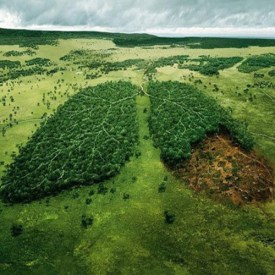 The last lines of stanza three read – “paper smoothed and stroked, turned transparent with attention”. This suggests that our frequent use of paper allows us to gain more knowledge and see more deeply, the more we devote ourselves to our own growth. The sibilant “s” sounds in “smoothed and stroked” suggest this is a soothing comforting process; however, it can also mimic the sound of machinery cutting down trees to obtain paper. This suggests the writer recognises the destruction we cause as humans to gain power. The conjunction “and” shows she understands this is a continuous process and how the more attention we give paper, the less concentrated the world’s forests will become. The adjective “transparent” means to be see through; however, when thinking in terms of people rather than paper, it means to be clear and honest. This could be the poet cleverly exposing those in power such as government organisations who need to be more explicit.
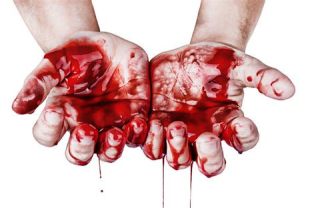 This line is isolated within its own stanza which emphasises its significance. Here, the author is highlighting that human power is fragile, like tissue. The power we find in paper or the power we think we hold as mankind, is all a facade – an illusion. She could also be referencing the consequences that come from our self-serving nature, implying that blame’s tattoo is marked on our skin. The 4 billion trees massacred annually, the 137 species that continue to become more and more extinct every day – the blood is literally on our hands!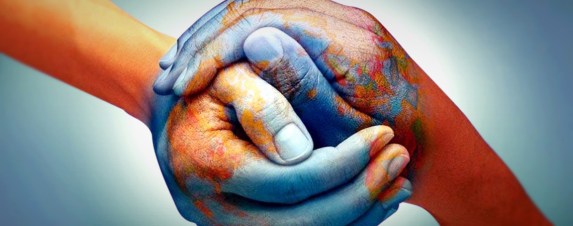
 However, not only are historians able to uphold the moral foundations of society, but so are revolutionary figures within literature, like J B Priestley, the playwright of ‘An Inspector Calls’ a morality play intended to make audiences question Capitalism within society. Within the play, the Inspector claims that ‘We are not alone. We are all members of one body’ suggesting that the Inspector believes Capitalism is one of the contributing factors of corruption within society, casting out the supposed idle people within society, or those who challenge the Capitalist structure. Instead, he proposes that Socialism is the way forward, by treating everyone equally regardless of their social status within society. The noun ‘members’ could symbolise the body parts that society shares, when one cell, one tissue, one organ, one body part fails, the whole body collapses, thus being a reflection of society itself, where if one person is ostracised from society then the whole of society collapses. Furthermore, the noun ‘members’ could also suggest that everyone is entitled to play their part within society, share their opinions and feelings, as though they are a part of a social club or organisation, the social organisation being society itself. The engagement dinner may be seen as a microcosm of society, each family member associated with an inimitable trait that is solely theirs to express. Furthermore, the frequent repetition of the collective pronoun ‘we’ further emphasises the concept of inclusion, an ideal that the Inspector believed to be his duty to promote and share, as a member of society.
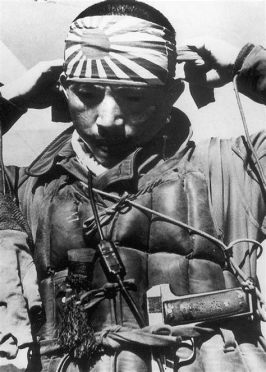 Beatrice Garland openly expresses challenge to the influence that culture poses over people. In her poem ‘Kamikaze’, she explores the repercussions of attempting to defy your culture. When Shinto is followed unquestionably, a great honour is bestowed upon you and your family, but in the poem ‘Kamikaze’, at the prospect of reluctance to devote his life to what society believes is the right path for him, he is treated “…as though he no longer existed…” and rejected by his family; furthermore, his children learned to “…live as though he had never returned”. Garland reveals the conflict that ensues within the family – even the pilot’s grandchildren learn by the example of their elders, to shun and ignore their grandfather, exposing how cultural influences are passed from one generation to the next. The “shaven head” of the pilot, the “samurai sword” and the prayers all symbolise adherence to the strict bushido honour code of death before defeat. Kamikaze pilots were expected to die in battle by crashing their planes into enemy ships. We can also see the psychological effects and consequences of not adhering to cultural expectations through the powerful line at the end of the poem:

 Several hours earlier, he was sat, in the same position, under the same tree, with the same lost expression. Through the gap in the entrance, a young boy seemed to have caught his attention. He was coated in many warm, tight layers; he reminded the man of his brother, Jacob, who also used to be wrapped in hundreds of tight layers by his mother, who feared he would catch a cold. The man spotted the boy was on his tiptoes, grasping a long chestnut branch at an imposing tree. Squinting, he wondered what the young, care-free youth was doing; he was hauling at a mother chaffinch’s nest, prodding it to almost fall. The mother chaffinch’s blackish eyes observed the young, ignorant boy, peering down at her three eggs and then leaping forward, guarding her children from the discourteous child. Constantly repeating this action, he began tugging harder at the nest, oblivious to the harm he could cause. The mother bird echoed a strident squawk, startling the young boy as he jumped back, astonished by what he had just encountered. The turbulent wind seemed to aggress, plunging the young boy to the stony path for causing harm to the mother bird. Wailing, he scampered off, bawling for his mother down the extensive path. Shutting his eyes once more, the man seemed to have been reminded of his own care-free youth. He was sent back to his serene childhood and happier days, where the only thing that preoccupied his mind, was the amount of presents he would receive for Christmas, oblivious to the world around him. He knew now that there was much more to life than presents; a whole world surrounded him. But now, to him, most of it was dark.
 We Write